The advent and rise of the internet has changed the landscape for DVD rentals as we know it. The option of illegally downloading movies for free has become a viable and intriguing option for computer literate people. On the other hand the internet has opened an honest debate of brick and mortar DVD renting at Blockbuster versus the convenience and ease of online rental services such as Netflix where the DVDs are sent to you.
There are lots of points to weigh when considering how to go about renting films. First and foremost is to consider how many DVDs you rent on average per month. At the rough price of $4 plus tax at a local Blockbuster store things can add up quick. Netflix’s online plans are a much more cost effective option.
If you rent four DVDs a month in an actual Blockbuster store you’re spending the same amount as you would be for Netflix’s three out at-a-time plan which is set at $16.99 a month. To sweeten the deal members are given the ability to watch a limited selection of films and television shows on your computer or Netflix ready device. Selections range from classics such as “2001: A Space Odyssey” to niche titles such as “Dancer in the Dark” to television shows such as “The Office”. The instant watch feature is available with any of the Netflix unlimited plans which range from one at-a-time for $8.99 a month to eight at-a-time for $47.99.
Those of you that own an Xbox 360 might have noticed Microsoft’s partnership with Netflix this past fall when the New Xbox Experience system update came into effect. If one has an Xbox 360, a gold Xbox Live membership and any of the unlimited rental plans on Netflix they are able to view the instant watch selections on their televisions through their Xbox 360. This includes a small number of high definition titles. The new partnership with Microsoft essentially gives capable Netflix users a seemingly endless collection of films at home to watch at any time of the day.
In an attempt to combat the efforts by Netflix, Blockbuster devised their own online rental program. The program is similar in function to Netflix where users add films to their queue and the titles are shipped to the member at home. The one difference comes with Blockbuster’s Total Access program. For $19.99 a month members receive three rentals at home at-a-time and five in-store exchanges per month. This means that five times a month you’re able to bring your returned and sealed envelope of a DVD you received in the mail to the store to exchange it for a free rental.
When Blockbuster first began this promotion they offered unlimited in store exchanges for a cheaper price meaning if you rented 15 DVDs in a month you could turn that into 30 DVDs if desired. The other basic option for Blockbuster is $15.99 a month for three out at-a-time with no in-store exchanges. This does not come with any sort of online viewing feature like Netflix does.
While price for online services might lean in Blockbuster’s direction there are a few more items to think about that will help you make your choice. First you must consider the types of films that you’re going to rent. My experience has shown that many of the films that Blockbuster had as very long waits (which is as long as it sounds) are available to ship next day at Netflix. The general selection and variety on Netflix is much wider as well. Far more niche genre titles or obscure foreign films can be found on Netflix that are nowhere to be found on Blockbuster’s online program.
As far as the always important customer service goes Netflix trumps again. From my experience with Blockbuster’s online program I can’t help but suggest against it if you want to receive your DVDs in order and on time. With Blockbuster I would sometimes have titles that are listed as available skipped over. Instead of having the number one film on my list sent to me the title I ranked fifth would be sent. When you have limited time to receive and watch these films the idea that what’s available will be sent to me is always important. Another problem is receiving the wrong disc or a broken disc. While this isn’t an often occurrence it happened more times with Blockbuster than it did with Netflix.
There is a lot to think about when choosing the rental method appropriate for you. The best way to decide between the two services might be to use both services free limited trials that typically last two weeks. Although it is a limited time frame it might give you a good idea as to which program you’ll get the most out of.
The convenience of going to a store and picking a DVD up on a whim has been surpassed by the even more convenient process of having DVDs shipped straight to your mailbox. Both Netflix’s and Blockbuster’s online programs are a much cheaper alternative to the old fashion brick and mortar. The two companies seem poised to battle for supremacy in online DVD renting. As far as the future of physical store rentals one can only wonder if the competition for online supremacy plus the economic struggles will spell disaster for Blockbuster’s in-store rental system.
Thursday, January 22, 2009

Album review: Umphrey's McGee - "Mantis"

Umphrey’s McGee
Mantis
SCI Fidelity
January 20, 2009
Like most jam bands Umphrey’s McGee is best known for their live performances and material. The band’s new album, “Mantis”, explores a new method of creation for the rising group. Unlike previous albums, “Mantis” was created entirely inside a studio and is not comprised of any previously played live material. Jam band purists who are initially turned off by the sin of the studio may rethink their beliefs after giving “Mantis” a spin.
Umphrey’s McGee belongs to the small subgenre of progressive rock jam bands. Stage-wise the band is undoubtedly influenced by the methods of both Phish and Grateful Dead. Although UM’s sound is of its own unique style, the band can be likened to progressive giants such as the energetic King Crimson. “Mantis” brings the group back to their 2004 effort “Anchor Drops” in exploring the progressive side of things.
The 20 month period spent in the studio creating “Mantis” was seemingly well worth it. While calling it the band’s best work would be jumping far ahead of myself I’m surely hooked on the album. For fans of previous work by UM all that is loved is back. The soaring choruses led by lead singer and guitarist Brendan Bayliss and the absolutely jarring riffs and guitar shredding by both Bayliss and second lead guitarist Jake Cinninger.
The band’s choice to keep the album at a concise 54 minutes proves to be a good call. Taking up a large part of those 54 minutes is the album’s title track. It is a near 12 minute track that leaves no part of the progressive rock genre untouched. Complete with a few energetic and soulful solos and jazz-funk piano the track speeds by you. When it reaches its virtuous finale you’re left wanting more.
The bottom line is that “Mantis” is essentially full of highlights. I’ve given the album a good five or six plays and don’t ever find myself skipping a track here or there like you might find yourself doing from time to time. This six man band fuses all parts of the band into one tight package. They’ve created their own unique sound and have elevated it to a point of pure achievement.
If you’re new to the genre or the band “Mantis” would be a viable place to start. The hooking lyrics and addictive sounds are enough to grasp the newest of ears. While UM might always be remembered as one of the premier live improv bands of the genre, “Mantis” cements them in a new place: the studio.
Album review: The Bad Plus - "For All I Care"

The Bad Plus
For All I Care
Universal Classics
February 3, 2009
For jazz trio The Bad Plus playing inventive and creative covers of popular rock songs has been a signature part of their musical progression. The group’s latest album matches the trio of pianist Ethan Iverson, bassist Reid Anderson and drummer Dave King with vocalist Wendy Lewis.
“For All I Care” marks two new advances in the band’s history. For one, it is the first all cover album from the band. In addition, Lewis’ arrival to the group marks the first time they match vocals up with their inventive covers. Fortunately for all involved the new concept turns out beautiful. The vocals correlate perfectly with the trio’s style of music.
What makes The Bad Plus’ covers so unique is the way they transform popular rock songs into intense jazz pieces. They’ve done it to David Bowie’s “Life on Mars, Rush’s “Tom Sawyer” and Nirvana’s “Smells Like Teen Spirit”, which is perhaps their most popular and notorious cover to date. Because the trio is made up of a pianist, a bassist and a drummer the ever popular guitar pieces must be made up for, which is where the true creative nature of the trio comes into play.
“For All I Care” covers all walks of music. It begins with a cover of Nirvana’s “Lithium” before transitioning into a cover of Pink Floyd’s “Comfortably Numb”. Similarities in both songs are of course very noticeable but each cover takes on a mind of its own. Lewis’ warm and low key vocals add to this. The group sublimely takes the song out of its previous realm and into the jazz world.
I am typically not one to drool over covers but The Bad Plus happens to be an exception. This is not the case of a group trying to sound like another group. You realize it’s a Pink Floyd song but it’s an entirely different experience. The same holds true to the cover of The Flaming Lip’s “Feeling Yourself Disintegrate”.
The Bad Plus tackles it all in their newest album. From some of the most notable progressive rock songs to 20th century classic arrangements from the likes of György Ligeti and Milton Babbitt each cover is a new experience in of itself. Long time fans of the trio might be disappointed with the lack of their usually brilliant original recordings. Otherwise, “For All I Care” is an interesting, intriguing and ultimately very satisfying album full of reworked songs from at least one band or artist we can all identify with.
Ah, I planned on doing more...
Ooh boy, did I plan on doing more during my break from school. I figured I'd write reviews for all the Oscar contenders. Sadly this didn't come to fruition. I never imagined how lazy one can get with no job and no school to keep them busy. And it's not even over yet. Ah well, if anyone actual reads this blog you'll be happy to know I'll be posting a lot more things here as the semester starts to begin.
- Mike
- Mike
Thursday, December 11, 2008
Mabrouk El Mechri's "JCVD" (2008)

2008 is beginning to be known as a year of comebacks in film. We’ve already seen Sly Stallone continue his miraculous return to the big screen with the fourth film in the Rambo series. With hype swirling around Mickey Rourke’s performance in The Wrestler and a role that allowed Tom Cruise to slip out of the spotlight in Tropic Thunder (that eventually earned him a Golden Globe nomination for best supporting actor) some big names are back on track. Jean-Claude Van Damme is the latest actor to strike it rich with his comeback vehicle simply titled JCVD.
JCVD, a French film directed by French-Algerian director Mabrouk El Mechri, stars Van Damme playing himself. It is a meta-action doubling as a self-spoof/parody in the vein of Being John Malkovich. Van Damme, who is struggling with his career and unable to raise sufficient funds to pay legal bills for his child custody case, gets confused for a bank robber when he stumbles into the middle of a bank heist.
I’ll be honest. I haven’t seen many Van Damme films. I’ve never been a fan of the Van Damme’s and the Seagal’s of the film industry. If there’s one genre I never got into that would be it. JCVD is a film that succeeds largely due to Van Damme’s inspiring and brutally honest performance. Van Damme even has an emotionally charged eight minute one-take monologue that ignites the film’s third act. The film strays from the ongoing plot and simply puts the viewer face to face with Van Damme himself. This moment in the film is where you realize as the viewer that Van Damme is back. Fan or not, you can’t deny the remarkable achievement he reaches at this moment by reflecting on his past.
JCVD is a fresh, original and cool film. El Mechri, who lists French new wave director Jean-Luc Godard as a major influence, seamlessly ties all the acts together with an irregular narrative complete with flashbacks and “point-of-view” storytelling. This tongue-in-cheek look at international film star is flat out entertaining. All the drama, comedy and action is tied together without a hitch.
There’s not much to say about this one. Whether you’re a fan of Van Damme or not JCVD is worth watching. It surely is one of the surprise success stories of the year. The film won’t sniff any major awards this year but even so, it is an ultimate achievement for Van Damme and the filmmakers. JCVD is brutally honest, enthralling and truly a testament to filmmaking.
Wednesday, December 10, 2008
Ron Howard's "Frost/Nixon" (2008)

One of the most significant historical events that I never learned enough about in high school was the Watergate scandal and the fallout left upon Richard Nixon. Ron Howard’s new film Frost/Nixon, a film adaptation of the stage play, delves into the now famous interviews between talk show host David Frost and the former president Richard Nixon.
This dramatization of a series of interviews granted to British talk show host David Frost in 1977, three years after Nixon resigned from his presidency, plays like a back and forth cat and mouse thriller and a boxing match rich with suspense. The bizarre thing is that with any knowledge of the subject beforehand the outcome of this bout is already known. While this is true with all history-based films there’s something special about this one in particular.
This isn’t a retelling of a violent war. They are merely a series of interviews. What allows the viewer the ability to fall right into the film, whether they know the outcome or not, are the outstanding performances by the ensemble cast. Frank Langella gives a seemingly uncanny portrayal of Richard Nixon. Langella does something unique with Nixon. He, much like the real Nixon, gave the audience a chance to feel sympathy for him during the interviews. In the end everyone, including himself, is able to see right through this façade of cover-ups. Langella’s performance is an award-deserving three dimensional take on Nixon. From the flawlessly replicated mannerisms to the sulking body posture to the profoundly deep and brooding voice Langella’s portrayal of the former president will be noted come Oscar time.
To applaud only Langella would be to applaud only part of the team. Michael Sheen seamlessly loses himself within this out of place character of a talk show host. Frost was a man that at the time lived for the limelight. He was a man seen as more of an entertainer rather than as an investigative journalist. Sheen portrays both sides of this before and after transformation very well by effortlessly slipping into character.
Supporting performances such as Kevin Bacon’s stern performance as Jack Brennan, one of Nixon’s protective advisors, and Sam Rockwell as the determined James Reston Jr., one of Frost’s main researchers, complete a cast worthy of praise all around.
Frost/Nixon is a film that flew right past me. Once the film reached the second half, and more importantly the fourth interview, I was locked in my seated position and rarely looked away from the screen. With the aforementioned brilliant and realistic performances coupling with the stark reality of the dialogue the film is as suspenseful as can be. Howard’s directing only adds to the mix as his up close and personal approach during the interviews locks the combatants down right in front of you never letting go until it’s all over. Every emotional portion of dialogue and facial gesture is perfectly captured.
For me to speak on the historical aspects of this riveting film would be for me to go over my head. I prefer to leave the history to those who know it best. What I do know is that Frost/Nixon is one of the more compelling and entertaining films of its kind this year. The script plays like a stage play script with its limited locations and focus on dialogue but none of that does harm to the film. Frost/Nixon will undoubtedly be up for Oscar consideration as far as best picture goes and Frank Langella, who led a strong overall group of actors, will be a heavy favorite to win best actor with his powerful and moving performance that almost made me feel a drop of sympathy for the lonely Richard Nixon.
Thursday, December 4, 2008
Steven Wilson - Insurgentes (2008)

Steven Wilson
Insurgentes
Kscope
November 26, 2008
Porcupine Tree frontman Steven Wilson claims his new solo album is “Different from anything I’ve ever done before”, otherwise he wouldn’t have bothered. Insurgentes, Wilson’s first true solo album, is all that and more. Combining his musical past of progressive rock with drone, noise and post-punk shoe gazer music like Joy Division and The Cure, Wilson’s long coming solo project opens up new doors in the musician’s heralded career.
Wilson has done it all in his ever-growing career. He’s seen as one of the progressive rock masterminds of the modern era. He is to Porcupine Tree as Robert Fripp is to King Crimson. Wilson’s career spans the genres as he’s tackled all types of progressive rock with Porcupine Tree, an ambience-flavored type of drone with Bass Communion and an art rock collaboration with Israeli rock star Aviv Geffen. This is why Wilson’s brand new approach to his newest album comes as no surprise to fans.
Insurgentes, as Wilson himself describes the album, is an eclectic mess. It’s the good kind of mess though. It’s the kind of mess that you make but turns out to be a brilliant discovery. Except that Wilson made this diverse collection of sounds on purpose. Wilson recorded Insurgentes over a long period in many different countries. The project spanned from December 2007 to August 2008 as Wilson recorded during his busy schedule wherever he could. In fact, title track “Insurgentes” was recorded in a church in Mexico on a church piano.
The album opens with the harmonious Harmony Korine, a title definitely referencing the art house film director of the same name. This track sets the eternal tone for the album. It’s a true blend of Porcupine Tree-inspired rock with the shoe gazing influence Wilson himself mentioned. The second track on the album, “Abandoner”, introduces the dark, almost horror film soundtrack inspired drone and noise portions of the album. The final minute of the track is a barrage of grinding atonal sounds.
The time and distance spent recording Insurgentes has paid off for Steven Wilson. I was two songs into the album when I picked it as my album of the year. After listening to the full album and the bonus disc I realized I hadn’t jumped the gun too soon. Insurgentes is what music is all about. Wilson experimented with all his influences, abilities and styles to create an album he himself would love to listen to.
Monday, December 1, 2008
Remakes: The Modern Plague
Haven’t people these days heard the saying “Don't fix what's not broken”? Movie executives must turn the music up and jam the earplugs in tight whenever this sentence arises.
On what seems to be a week-by-week basis Hollywood gives the green light to a new remake. While the concept of remaking films is certainly not new, it has become a disturbingly tired and trendy occurrence. No film is safe in this modern era of filmmaking categorized by countless remakes that double as cheap money grabbers. Everything is at the risk of being remade – from science fiction classics such as The Day the Earth Stood Still to smaller films with strong cult followings such as The Crazies.
In the past few months remakes have gone too far. Quarantine attempted to become one of the quickest remakes in recent history as it remade the superior 2007 Spanish film [REC]. This brings up remake type number one. The foreign language film made American. Other countries don’t do this. This type of remake is by far the most pointless of the bunch. 95% of the time the Americanized version of the film is a far inferior film. The horror genre is especially to blame for the recent increase in this. For some unknown reason an inferior version of The Ring just had to be created four years after the initial film was released. Ripping foreign films from the cultures and subtexts they come from spell disaster for the finished American product.
Earlier this month it was announced that Will Smith and Steven Spielberg would be taking part in a remake of the 2003 Korean film Oldboy. Recently, Smith noted that the film wouldn’t be a remake as much as it is a reworking of the original material. Without the success of the initial release Spielberg wouldn’t dare delve into such dicey and taboo material. Oldboy, one of the best films this decade, is one third of director Chan-wook Park’s revenge trilogy. All three films embody a visual style personal to Park and performances that will be remembered for quite some time. Oldboy isn’t exactly a pleasant film. The film is as twisted as they come. I, for one, can’t even begin to envision how household names like Will Smith and Steven Spielberg will even begin to handle the source material.
Not all remakes are bastardized gifts from the devil. John Carpenter’s The Thing is an example of how remakes, if necessary, should be done. Pairing a director like John Carpenter to a project like that is an example of a match made in heaven. Carpenter’s updated version and the original Howard Hawk’s production differ in terms of plot and style. I much prefer remakes that are the new director’s personal vision. Shot by shot remakes are extremely pointless and unnecessary. I still can’t believe someone allowed Gus Van Sant to remake Psycho.
Another type of popular remake is the updating of one of our own classics. As referenced to earlier, The Day the Earth Stood Still remake is being released this December. Rigid and awful as always, Keanu Reeves is set to play the iconic role of Klaatu that Michael Rennie immortalized more than 50 years ago. As if things couldn’t get worse for the project, director Scott Derrickson’s most notable film is The Exorcism of Emily Rose. Oh boy, I can’t wait. Year after year films fall off the never should be remade list.
Searching for a list of film remakes on Wikipedia says it all: “Due to the size of this page, the main listing has been split into two sections”. I’ll give any film a chance. I realize some remakes are the result of a director wanting to pay tribute to one of their favorite films or directors. The best way that can be done is to concoct an original film in the same vein as the directors you were influenced by, not from replicating their style or work.
I’d recommend avoiding most remakes like the plague. If by chance the film you’re going to waste $10 on at the local cinema is a remake you should save your money and support the original. Remakes have the potential of ruining American cinema by sucking all originality out of films. Alright, maybe I’m overreacting a bit, but that doesn’t hide the fact that remakes are awful more often than not. I’d just like Hollywood to slow down a bit. I know it’s hard but put the thoughts of piles of green money aside for a moment and think about what you’re doing to the industry you supposedly love. Each new remake is just another proverbial nail in the coffin of originality.
Director Profile: Lloyd Kaufman

For a little over a month now I’ve been writing about a director I admire and appreciate on a weekly basis. The five directors I’ve chosen to write about so far are filmmakers considered to be geniuses and the cream of the crop within their respective genres. This theme will not change this week.
There’s a phenomenon in film known as the B-movie. That’s capital B for Bad. Although most B-movie’s fit into the exploitation, horror, and science fiction genres, being classified as a B-movie tends to relate to the low budgets used to create the films. These so bad they’re good films typically build up legions of cult followings of diehard fans that allow these low-budget films to be made.
Lloyd Kaufman, an American film director, producer, screenwriter and occasional actor, is the co-founder of Troma Entertainment. Troma, which is considered the longest running independent film studio, is one of the leaders of the modern B-movie. Kaufman and Troma are best known for their absurd, schlocky and gore-filled films that intend to purely entertain, humor, disgust and shock.
Troma and Kaufman’s most well-known film is The Toxic Avenger. In fact, Troma’s current logo features Toxie, the film’s hero. The Toxic Avenger, whose success has spurned out three sequels, an animated cartoon, and a video game, is about Melvin, a stereotypical scrawny nerd who accidentally falls into a bucket of toxic waste. This in turn causes him to mutate and become the Toxic Avenger, intimately known as Toxie. Toxie, with mop in hand, becomes determined to defeat all crime in Tromaville (the fictitious city Troma places most of their films in). While content-wise this might sound a bit absurd, The Toxic Avenger was executed with pure grace and charisma by Kaufman.
To achieve extreme appreciation for what Kaufman and the rest of Troma does one would need to view a couple of their behind the scenes documentaries. While extremely entertaining and funny, the docs do justice to painstaking work the team puts in for one of their films. Nothing seems to ever go right for Kaufman, the actors, the unpaid interns and the rest of the crew hard at work. Even so, the finished products don’t represent the struggles on set. Time after time Kaufman is able to create his newest B-movie masterpiece.
Making a B-movie that is both entertaining and re-watchable is not an easy task. For Troma and Kaufman it has become second nature. They consistently churn out memorable characters, quotable quotes and disgustingly impressive special effects. Take Troma’s newest film Poultrygeist: Night of the Chicken Dead for example. Kaufman attempted something different with Poultrygeist. The film blends the classic Troma formula with the musical genre. The new experiment worked perfectly as critics applauded Poultrygeist and fans like me claimed it to be one of Troma’s best films ever, a bold statement considering their long line of work.
It’s hard to promote Troma films to everyone because they aren’t for everyone. They certainly aren’t films I’d want to watch with my parents. If you’re looking to expand your horizons drastically – and I mean drastically – take a trip to Tromaville. Kaufman and Troma have earned my eternal respect. I’ll take this opportunity to rip a page from the Troma handbook. Rather than spending your hard earned cash this holiday season on a piece of junk one of the conglomerates stews together, spend it on one of the little guys. Kaufman and Troma do it for the love of the game, not for all that superficial fame.
Essential viewings: The Toxic Avenger, Citizen Toxie: The Toxic Avenger IV, Terror Firmer, Poultrygeist: Night of the Chicken Dead, Class of Nuke ‘Em High, Troma’s War, Trome and Juliet, Sgt. Kabukiman N.Y.P.D.
Monday, November 24, 2008
Lloyd Kaufman Defines Media Consolidation
http://www.youtube.com/watch?v=RkWHUNsjlSY
Lloyd Kaufman of Troma's brilliant little speech about media consolidation and such. Take a look, adhere by it.
Lloyd Kaufman of Troma's brilliant little speech about media consolidation and such. Take a look, adhere by it.
Sunday, November 16, 2008
A Different Bond is Still a Good Bond

For fans of the 46-year-old James Bond film series the release of a new installment is much more than your average theatrical release, it’s an experience and an event no other film series is able to create. 2006’s Casino Royale, which is seen as a reboot for the longstanding series, cemented Daniel Craig as a more than capable James Bond player and introduced a new gritty tone to the Bond series. Quantum of Solace, the newest addition to the series, looks to pick up right where things left off.
Solace, which is the first direct sequel in the series, has James Bond battling Dominic Greene (Mathieu Amalric), a member of the secret Quantum organization. Greene poses as an environmentalist who is attempting to take control of Bolivia’s water supply.
While it’s surely arguable, the James Bond series is one of cinema’s most storied and legendary film series. Solace is the 22nd “official” Bond film where official means it’s an EON Productions produced James Bond film. The series has seen six different actors play James Bond from the original Sean Connery to the current Daniel Craig. With this kind of extensive past the large fan base of Bond fans, comprised of both diehard and casual fans, always have lofty expectations for each new release. Solace, which is directed by Marc Forster, does as much justice to the Bond series as it needed to do.
Say hello to the new James Bond. This isn’t the gadget-wielding Bond of past. He sure as heck isn’t the same Bond we’ve seen stop evil genius after evil genius from taking over the world. This is a rough, rugged Bond brooding with emotion. While some fans may hold bitter over the change from over-the-top to a realistic and serious tone, it’s time to face the facts and realize there comes a time for change. The new Bond films themselves are highly indicative of modern filmmaking in general. As far as I can tell, change, in this case, is good.
Solace, which is far more action-oriented than Royale, is an exhilarating and fast-paced experience. My only criticism of the action is the way it was handled by director Marc Forster. While the action scenes are not at all poorly thought out or unimpressive they were noticeably disorientating. Each high-octane action sequence is made up of quick cuts and edits, hyper-edits as they call it in the business, leaving the viewer with no sense of the surroundings and at times no clue as to what exactly is happening. On occasion this leaves location unidentifiable and can be extremely distracting. Royale’s parkour-style chase is an example of how to handle things properly. The scaling of the construction site features smoother and longer shots and truly conveys the grand scale of the chase where as Solace’s tight shots and quick edits does little for the action. Action scenes can be intense and exuberating without the camerawork being all over the place and jumpy. That said the action in Solace is still conceptually impressive and ultimately thrilling.
While Solace’s plot won’t particularly amaze it’s still a solid one. Solace is hell-bent on revenge. Both Bond and Bond girl Camille (Olga Kurylenko) are seeking to close the doors on past events. I was very impressed with how this emotion was handled in both characters. In fact, the characters in general were a typically impressive facet of the film. Returning characters Felix Leiter and Mathis were both terrifically handled and make for some of the best Bond-character interaction moments in the film, complete with signature Bond style dialogue. The building relationship with Bond and M (Judi Dench) is absolutely fantastic. Mathieu Amalric is easy dislikeable and despicable as Dominic Greene.
If you find yourself disliking Solace immensely you might be stuck deep in the past. Fact is this isn’t a James Bond film of the past. The main villain doesn’t pet a cat all film nor does he have a pond of man-eating piranhas in an underground lair. Hell he doesn’t even have a bleeding eye like Le Chiffre in Casino Royale. It’s no secret that while Solace isn’t a perfect film it’s a more than acceptable entry into the Bond canon.
If Daniel Craig’s first two films as 007 are any indication of the future Bond fans are in for a treat or two down the line. Solace features tons of action, plenty of thrills and memorable characters. Cynics may call this a very un-Bond-like generic action film. I’ll call it an enthusiastic and bold approach that’s a step in the right direction for this historic and legendary series.
Thursday, November 13, 2008
Fritz Lang Director Profile (for The Recorder)


Calling Fritz Lang ahead of the game would be quite the understatement. Lang, who began his career during the silent era of 1919, constantly set the bar during the early stages of cinema with his revolutionary films that spanned from fantasy dramas to thrillers to art films.
Lang was a student of the German Expressionism style and it showed in his films. The style is categorized by the use of light versus dark and suffocating interiors and set pieces of an unrealistic nature, as seen in Robert Wiene’s The Cabinet of Dr. Caligari. The plots and stories of German Expressionism typically dealt with oppressive themes such as madness, betrayal or the threat of a higher power. Sometimes the themes would mix with supernatural or mystical elements. This, combined with the sometimes absurd set pieces, created a dreamlike feel for a good number of the Expressionism films. Expressionism is seen as being important for influencing popular genres such as the early horror films and film noir.
Lang’s first masterpiece was his 1922 crime epic Dr. Mabuse the Gambler. Gambler is a four hour silent film that was originally told in two parts. The film is supposedly inspired by Al Capone. Most film historians point out that this depiction of one of film’s first “super-criminals” is foreshadowing Adolf Hitler’s reign of Germany. Dr. Mabuse is a psychologist and uses powers such as hypnotism to become a con artist achieve his evil goals. With enough patience from the viewer, Dr. Mabuse the Gambler is a tremendously sprawling film qualitative of the German Expressionism genre and at the same time a landmark gangster film glimmering with examples of things to come in the future of cinema.
In 1927 Lang created his next classic with Metropolis. This futuristic dystopian focused on the clash between workers and owners in an urban setting of capitalism – a common theme for many films these days. Metropolis was the most expensive film of its time and this was for a good reason. Lang’s lavish special effects still impress to this day. The elaborate settings have links to the German Expressionism Lang began with but are combined with a sense of art deco and contemporary modern art style. Metropolis’ contributions to the science fiction genre are endless. In 2008 a 16mm reduction negative of the original cut of the film was found in a film museum’s archives in Argentina – something which was long considered lost. If you haven’t seen this masterpiece there will be no better time to see it when the entire film is released for the first time ever on DVD and Blu-ray in 2009.
From here Lang went on to create the espionage thriller Spies and the widely considered first ever “serious” science fiction film Woman in the Moon. While both films are huge successes for Lang, I’ll direct most of my attention to Lang’s first “talkie”, his 1931 masterpiece M. M is a film that deals with the then taboo subject of a child murderer. Peter Lorre’s lead performance as Hans Beckert, the murderer, jumpstarted his career and lead to him being given many similar roles as a villainous character. Most of Lang’s achievements with M come from subtleties such as a unique way of capturing the image or the use of whistling in one of the film’s key scenes. M is also seen as a major precursor to the film noir genre America adopted in the 1940s. Most of this inspiration comes from the dark and stylish cinematography Lang utilized to create his atmospheric film.
After Lang left Germany, the country that he fared so well in with his early work, he came to the United States. Lang worked on a variety of types of films including the film noir genre he helped inspire, westerns with Henry Fonda, and war films. Lang is responsible for some of film noir’s greatest films including Scarlet Street, Woman in the Window and The Big Heat. Lang left a legacy of being one of the most inspirational film directors of all time. He left an exhaustive catalogue of work of carefully created films. If you’d like to check out where cinema began and how it grew, examining Lang’s work alone would do you good.
Essential viewings: Destiny, Dr. Mabuse the Gambler, Metropolis, Spies, M, Fury, The Big Heat, Scarlet Street, Woman in the Window.
Friday, November 7, 2008
Melville’s Films Defined Cool (for The Recorder)

French director Jean-Pierre Melville’s stylish film noirs are the epitome of cool. Melville’s minimalistic films contain cool, calm and suave gangsters, stylized imagery and a strong emphasis on weapons and accessories like hats and jackets.
Melville, who was born Jean-Pierre Grumbach but used the pseudonym Melville in tribute to American author Herman Melville, began in the film industry as an independent director and owner of his own studios. Melville quickly became famous for his tragic film noirs that to this day stand as some of the most influential and revered work within the genre.
The word cool is overused to hell and back these days. Melville’s pulpy films are the truest definition of the word in my opinion. To explain this one would need to bring up examples straight from the films themselves. In Melville’s influential early gangster film Bob le flambeur, which focused on an aging veteran of the crime business, the main character Bob enters a room in which a woman he had interests in was sleeping with another man. In any other film an event like this would create some kind of violent altercation. Rather than stir up trouble, Bob simply tip-toes out of the room in a calm and cool fashion letting things be as they may. It’s this kind of offbeat thinking and dare I say “swagger” that many of the characters in his films can identify with.
The “cool” nature of Melville’s films extends to the style and imagery of the films as well. Le Doulos, which in French slang translates to hat but in the underground world of cops and robbers means the informant, is an example of the perfect use of shadows in film noir. Noir is heavily distinguished by its chiaroscuro – which is the contrast between lights and darks. Le Doulos, which is a French New Wave inspired film noir, features dark shadows so heavy that it feels suffocating upon the viewer and the characters. The visuals are so arresting and gripping that it alone keeps you interested in the film.
Melville’s films also helped breed a crop of “cool” French film stars. Alain Delon was probably the most connected actor with Melville and became one of France’s most popular film stars of the era. Delon can be best thought of as a French version of Humphrey Bogart. Delon is best known for his career-defining performance as hitman Jef Costello in Melville’s masterpiece Le Samourai. Delon’s charismatic acting style went hand in hand with his character that had the Zen-like approach of a samurai. Le Samourai is one of the most influential films of its kind. The character of Jef Costello has been the main influencer for Agent 47 of the popular Hitman games and John Woo’s hitman in his excellent film The Killer. Le Samourai has been described as “a razor-sharp cocktail of 1940s American gangster cinema and 1960s French pop culture” and is the pure film definition of cool.
Jean-Paul Belmondo, one of the most recognized actors of the French New Wave generation, also had a strong film relationship with Melville. He starred in the already mentioned film Le Doulos along with a couple more of Melville’s most popular films. Lino Ventura, another popular French actor, also worked in films with Melville at the helm. The combination of major, suave and charismatic actors and Melville’s ability to create untouchable gangland environments around them made for some of the best crime films ever seen.
While Melville wasn’t strictly about films concerning crime and gangsters as noted by his acclaimed films Army of Shadows and Les Enfants terribles he became popular for his remarkable style of filmmaking and attention to detail with his film noir and French New Wave blended films. Melville used real locations for his films and was one of the first French film directors to do so. His work has influenced modern directors such as Quentin Tarantino, John Woo, Jim Jarmusch, and more. In a world where everyone and their mother describes meaningless concepts and ideas as cool, nothing will be cooler to me than a wonderfully shot Alain Delon as hitman Jef Costello in a tan trench coat with his signature brim hat committing one of his well thought out and creatively crafted jobs.
Essential viewings: Le Samourai, Le Cercle Rouge, Le Doulos, Army of Shadows, Les Enfants terribles, Bob le flambeur, Le Deuxième souffle
Tuesday, November 4, 2008
Changeling Captivates From Start to Finish
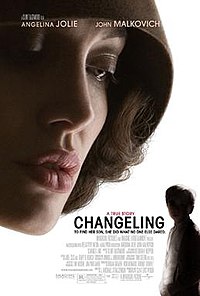
They say they save the best for last. Such is the case in the film industry. Every year when the air turns cold in our neck of the woods Oscar-worthy films are released into theaters one right after the other. Changeling, one of this season’s earliest contenders, is 78-year-old director Clint Eastwood’s most recent attempt to strike it rich at the Academy Awards.
Changeling is based on the true story of Christine Collins (Angelina Jolie), a woman who realizes that the boy returned to her is not her missing son. Collins’ missing son ties into the infamous "Wineville Chicken Coop Murders" case. Most of the film focuses on Collins and her attempt to bring the LAPD’s mistakes and corruptions public.
I’ve always been fascinated with time period films of any kind. I admire the hard work put into them by everyone involved from the actors to the director to the set designers. Changeling so easily captures the audience and places them into late 1920’s Los Angeles right from the start. The level of detail instilled by Eastwood is astounding. From cereal boxes to cable trolleys, everything feels authentic. The look and feel of the film is downright professional. This is a top-level production effort from all involved.
As engrossing as the film’s atmosphere is the acting is what carries the film along. Changeling may as well be Angelina Jolie’s coming-out party as a truly respected actress. Her versatility as an actress is shown as she leaps from the stylish 2008 action flick Wanted to this serious and emotionally moving film. Jolie gives a sense of endearment to the character that truly makes the audience care for her struggles. Her performance is powerful and more than just a showcase for a nomination as best actress.
While the spotlight is focused on the dolled up Jolie and her thunderous cries for the return of her real son the rest of the cast is not to be forgotten. Nearly every other performance in Changeling is as convincing as the next. John Malkovich is powerfully influencing as Reverend Gustav Briegleb, the man who spearheaded the fight against the corrupt factions of the police department. Other notable performances include Jeffrey Donovan’s performance as Captain J.J. Jones, leader of the LAPD juvenile department, Amy Ryan’s so good you won’t even recognize her performance as Carol Dexter, a wrongfully imprisoned woman and Jason Butler Harner’s unsettling performance as serial killer Gordon Northcott.
Changeling is as much about theme as it is plot. Eastwood strays from the conventional concept of making the film simply about a grieving mother and police detective work by exploring themes relevant to the time period. In the 1920’s Los Angeles was dominated by men. This only elevates the importance of Collins and the femme-driven battle against the police. The execution of this theme among others all goes hand in hand with Eastwood creating the perfect mood for the film.
Changeling is simply a very well made film. Whether it blows you away or not will depend on your patience. Some will find that it at times is overdramatic and over involving. I, on the other hand, was wrapped up in every minute of the film. I felt that part of the film’s purpose was to slowly and gruelingly detail the plight of Christine Collins dragging the viewer along the ups and downs. Eastwood tells this haunting and sorrowful tale in a way only a veteran like he could. The multi-genre Changeling is emotionally moving, compelling, entertaining and flat out successful as a mystery, thriller, drama and time period piece. This film is not a superficial shot at an Oscar, it’s a well thought out, well crafted and beautifully shot film that captures the audience from beginning to end.
Subscribe to:
Posts (Atom)


